


Fly Fishing for Beginners: Gear, Flies and Casting Tips
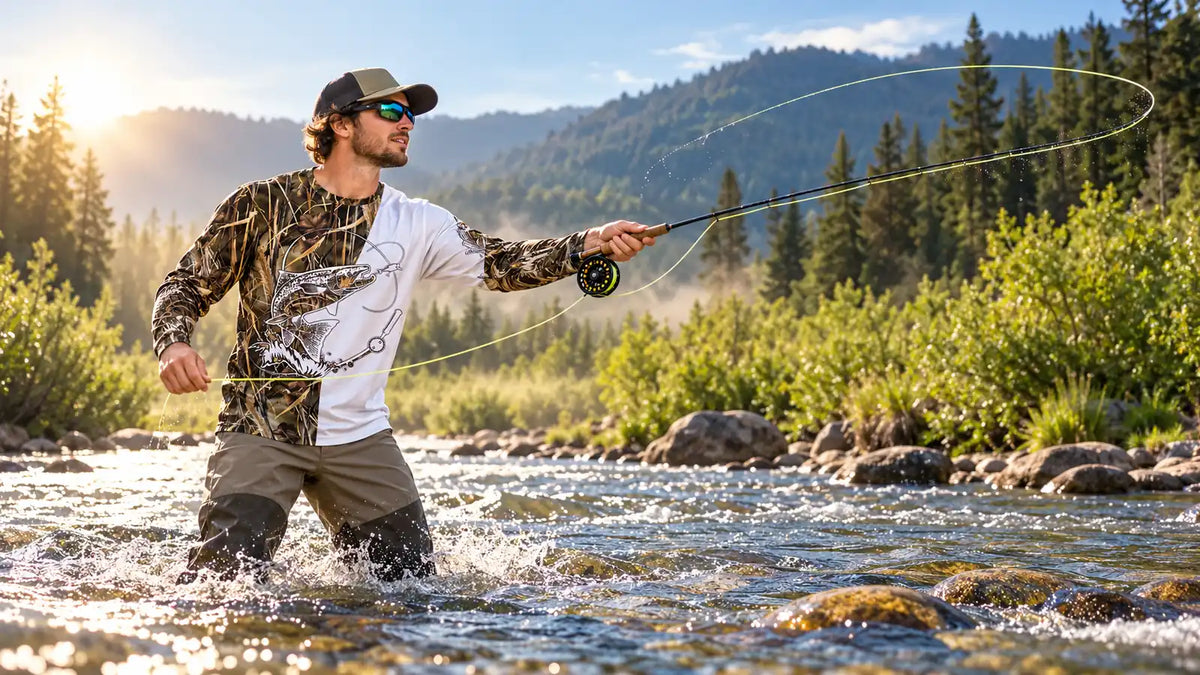
Fly fishing for beginners? Start with a 9-foot, 5-weight rod, a matching reel and weight-forward floating line, add a tapered leader and tippet, and practice casting in open space with few trees. Begin on small, willing fish such as sunfish in a pond, then move to trout once you can place the fly where you want.
This guide explains the basic setup, how leaders and tippets work, which flies to carry, casting tips and stream manners. New to fishing in general? Our how to cast a fishing rod covers spinning gear.
How fly fishing is different
With spinning gear, the weight of the lure carries your cast. In fly fishing, as the L.L.Bean beginner's guide explains, "the bulk and weight of the fly line provides the momentum to cast the fly." That is why the rod, line and leader need to match.

Beginner fly fishing gear
Rod, reel and line
L.L.Bean suggests starting with "a 9-foot, 5-weight fly rod paired with a matching reel and weight-forward floating fly line," a setup suited to many streams and ponds. Pre-matched outfits save guesswork.
Leader and tippet
A tapered leader attaches to the fly line, and a short tippet of two to three feet goes on the end, so the fly looks unattached on the water. The larger the X number, the thinner the leader or tippet. Choose a tippet that matches the leader or is one size smaller, such as a 3X leader with 3X or 4X tippet.
Flies
- Dry flies float and imitate insects on the surface.
- Nymphs sink and imitate young insects underwater.
- Streamers imitate small fish or large larvae. L.L.Bean calls streamers "probably the easiest to learn to fish": cast and strip the line back.
Ask a local fly shop what is hatching. Add line nippers, forceps and a landing net.
Fly fishing for beginners: 6 tips
1. Practice where there are no trees
A FishTalk writer learning the sport advises finding "water with few to no trees around you" until you can control where the fly lands.
2. Cast with less effort
The same FishTalk beginner lessons note that a cast "requires very little physical effort." Let the rod and line do the work instead of forcing it with your whole arm.

3. Start on small fish
Sunfish and other small fish bite readily and teach you to hook and land fish without risking your rod tip.
4. Move quietly
Trout spook easily. Watch your shadow and approach slowly, especially on clear streams.
5. Do not rush the fight
Let a fish tire before netting it. Yanking can snap the tippet or the rod tip.
6. Learn from others
Go with an experienced friend, take a class or visit a local fly shop early, before bad habits set in.
Is fly fishing hard for a beginner?
Casting takes practice, but you can catch fish early. Pick easy water, start with a streamer or a simple dry fly, and target eager fish like bluegill (see how to catch bluegill). Bass also take flies; read how to catch largemouth bass for where they hold.

Fishing shirts for your first fly trip
Our best-selling fishing shirts can be personalized with your name. Depending on the design, styles include Long Sleeve UPF, T-Shirt UPF, Hooded Long Sleeve UPF and Kids Long Sleeve UPF. Check each product page for fabric and fit details.
FAQ
Is fly fishing hard for a beginner?
Casting has a learning curve, but with a balanced 5-weight outfit, open space and small fish, most beginners catch fish on their first few trips.
What is the best way to start fly fishing?
Buy a matched 9-foot 5-weight outfit, practice casting in a yard or open bank, and take a lesson or visit a local fly shop.
What size fly rod is best for beginners?
A 9-foot, 5-weight rod with weight-forward floating line is a versatile first setup for streams and ponds.
What flies should a beginner use?
A few streamers, nymphs and dry flies that match local insects. Streamers are often the easiest to start with.
More from the Journal

How to Hunt Elk: A Beginner Plan From Trailhead to Wallow
A beginner elk hunting plan: trailheads, wind, cow calling, ambush spots and common mistakes.
3 min read
How to Hunt Turkey: Gear, Setup, Calls and Tactics
Gear, a step-by-step spring morning plan, turkey calls, fall tactics and safety.
3 min read
How to Call Ducks: 8 Duck Calls and When to Use Them
The eight duck calls to learn, what they sound like, when to use them and common mistakes.
3 min read