


How Do Bass Fishing Tournaments Work? Rules and Formats
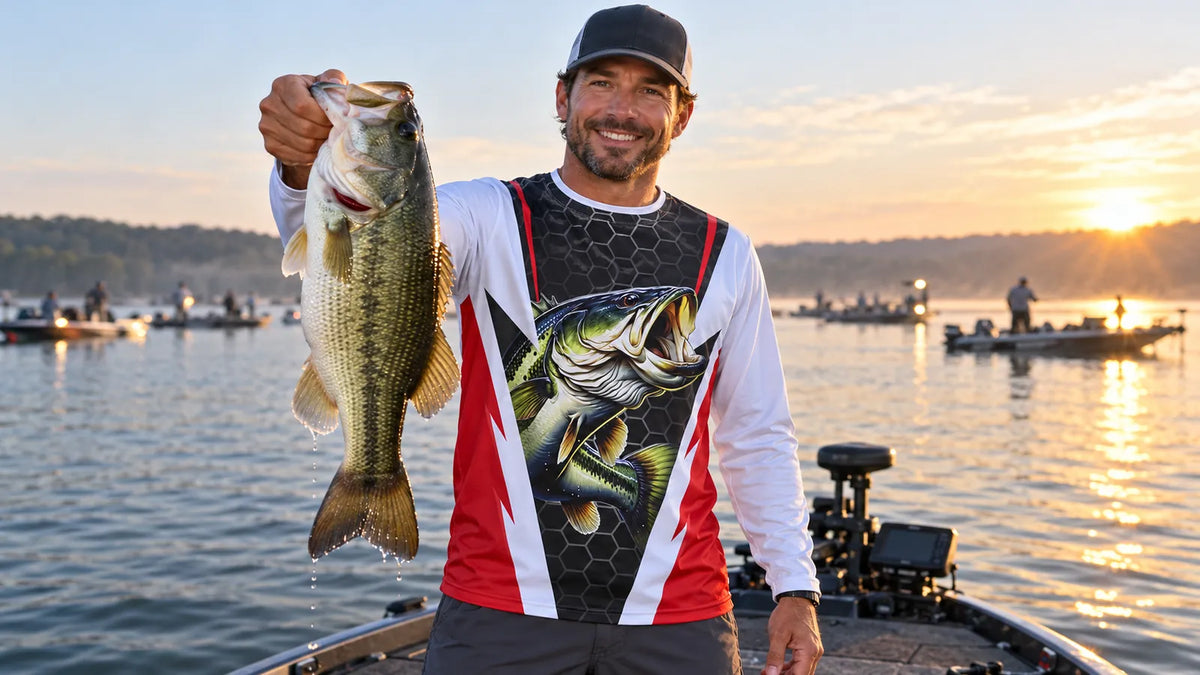
How do bass fishing tournaments work? Anglers fish a set lake during set hours, keep their best bass alive in the boat's livewell, and bring a limit (usually five bass) to a weigh-in. The heaviest total weight wins. Fish must meet a minimum length, dead fish usually cost a penalty, and most bass are released back into the lake after weighing.
Below we cover the basic format, the rules most events share, how team and boater/non-boater tournaments work, how prize money is usually paid, and what a team typically wears on tournament day. You can browse all designs in our fishing team shirts collection.

How do bass fishing tournaments work, step by step?
- Registration and rules meeting: anglers pay an entry fee and hear the rules for the day.
- Launch: boats leave in a set order, often by boat number, at "blast off."
- Fishing hours: everyone fishes until a check-in time. Late boats are penalized or disqualified.
- Weigh-in: each angler or team brings its fish to the scales in a bag of water. Total weight decides the order.
- Release: fish are returned to the lake after weighing.
Many club events last one day; bigger events run two to four days, with weights added together or with a cut to a final day.
What are the common rules?
Rules change from event to event, so always read the tournament's own rule sheet. Most share a few basics. A pro tour's explainer on how its tournaments work sums it up: "Each competitor is allowed to bring a five-bass limit to the daily weigh-in. Each 'keeper' must be at least 12 inches in length, unless local..." regulations differ. Club and youth events often use a five-fish limit per boat and set their own minimum length.
- Limit: usually five bass per angler or per boat.
- Minimum length: set by the event or by state law, whichever is stricter.
- Live fish: fish must be alive at the scales; dead fish typically carry a weight penalty.
- Artificial lures only in many events, and state fishing licenses are always required.

Do you need a boat to fish a bass tournament?
No. Many trails offer a non-boater (co-angler) spot. As a Bass Pro Shops beginner's guide explains, entering as a non-boater "typically reduces your entry fee quite a bit but the payout or prize money is also smaller." The boater controls the front of the boat, and it is customary for the non-boater to pay half the fuel. A draw decides who fishes with whom.
How do team bass tournaments work?
In team events, two anglers fish from one boat and weigh one combined limit. Local team trails, high school and college events, and club "buddy" tournaments often use this format. Teams pick their own spots and strategy, and the team with the heaviest bag wins. This is where team shirts are common: matching jerseys with a team name make it easy to spot your partner at the ramp and look sharp in weigh-in photos.

How much do bass fishing tournaments pay?
It depends on the event. Local club and team tournaments usually pay back a share of the entry fees to the top places, plus a "big bass" prize for the heaviest single fish. Larger trails add sponsor money. Check the payout table on the entry form before you sign up.
What happens to the fish in bass tournaments?
Most bass are released after the weigh-in. Anglers keep fish in aerated livewells during the day, and many events have release boats or tanks to return fish to the water. Good fish care also protects your score, because dead-fish penalties reduce your weight.
What should a fishing team wear on tournament day?
Long days on open water mean a lot of sun, so many anglers choose long sleeves. Our guide do UV fishing shirts work explains what UPF ratings mean. Teams also like matching jerseys with names and a team name. A few from our collection:
- Largemouth Bass Fishing Team Jersey: long sleeve UPF, T-shirt UPF, hooded and kids styles, from $29.99.
- Largemouth Bass Camo Team Jersey: long sleeve UPF and more styles, from $19.99.
- Black Walleye Fishing Team Jersey: for walleye events, from $19.99.
- Crappie Fishing Blue Camo Team Shirt: for crappie trails, from $19.99.
Per the product pages, the long sleeve UPF style is 100% polyester, lightweight, quick-dry and moisture-wicking, with UPF sun protection; hooded versions add neck and head coverage. For more tournament-day context, see what is a Texas slam in fishing.

FAQ
How do bass tournaments work?
Anglers fish set hours, keep their best bass alive, and weigh a limit, usually five fish. The heaviest total weight wins.
How many fish can you weigh in a bass tournament?
Most events allow five bass per angler or per boat, but always check the event's rule sheet.
What happens to the fish after a bass tournament?
Most are released back into the lake after the weigh-in.
Can you fish a bass tournament without a boat?
Yes. Many trails offer a non-boater or co-angler entry with a lower fee and a smaller payout.
More from the Journal

How to Hunt Elk: A Beginner Plan From Trailhead to Wallow
A beginner elk hunting plan: trailheads, wind, cow calling, ambush spots and common mistakes.
3 min read
How to Hunt Turkey: Gear, Setup, Calls and Tactics
Gear, a step-by-step spring morning plan, turkey calls, fall tactics and safety.
3 min read
How to Call Ducks: 8 Duck Calls and When to Use Them
The eight duck calls to learn, what they sound like, when to use them and common mistakes.
3 min read