

How to Attract Hummingbirds: Feeders, Flowers & Placement

Hummingbirds are curious, bold and fiercely hungry — they need to eat every few minutes while they're awake. That makes them one of the easiest birds to attract once you understand what they're looking for: reliable nectar, insects, shelter and water. Here's a simple plan that works across most of the US.
The 6-step plan
- Hang a clean feeder with homemade nectar (1:4 sugar to water).
- Put it in a smart spot (more below).
- Plant native, tubular flowers that bloom from spring through fall.
- Skip pesticides — hummingbirds feed insects to their chicks.
- Add perches and shelter nearby.
- Keep it going: clean feeders often and keep them up through fall migration.

The nectar recipe
Mix 1 part plain white table sugar with 4 parts water (for example, ¼ cup sugar in 1 cup water). Stir until dissolved; boiling isn't required but can help it keep a little longer. Let it cool before filling.
- Don't add red dye. It's unnecessary — the red on the feeder attracts them.
- Don't use honey, brown sugar, raw sugar or sweeteners. Honey ferments and grows mold quickly.
- Change it often: every 2–3 days in mild weather, daily when it's hot. Cloudy nectar or black specks mean it's time to clean.
- Store extra in the fridge for up to about a week.
Where to hang a hummingbird feeder
A frequent question is where not to hang one. Placement matters for the birds' safety and for the nectar:
- Windows: place feeders either within 3 feet of a window or more than 30 feet away. Close up, a bird leaving the feeder can't build enough speed to be hurt if it bumps the glass; far away, it's less likely to fly toward the reflection.
- Shade: partial shade keeps nectar from spoiling as fast.
- Cover: a tree or shrub within 10–15 feet gives a perch and escape route.
- Away from cats and from spots where a predator can hide below.
- Visible: hang it where you can enjoy it — and where hummingbirds passing through will spot the red.
Got a bully?
Male hummingbirds defend feeders aggressively. If one bird chases off all the others, add a second or third feeder out of sight of the first — around a corner of the house works well. One bird can't guard them all.

Plant flowers hummingbirds love
Feeders help, but flowers are the foundation — and they also attract the small insects and spiders hummingbirds need for protein. Aim for something blooming from spring through fall. Natives for much of the eastern and central US:
| Plant | Type | Bloom |
|---|---|---|
| Red columbine (Aquilegia canadensis) | Perennial | Spring |
| Coral (trumpet) honeysuckle (Lonicera sempervirens) | Vine | Spring–summer |
| Bee balm (Monarda didyma) | Perennial | Summer |
| Cardinal flower (Lobelia cardinalis) | Perennial (moist soil) | Late summer |
| Trumpet creeper (Campsis radicans) | Vigorous vine | Summer |
| Native salvias, e.g. Scarlet sage (Salvia coccinea) | Annual / perennial in the South | Summer–fall |
Choose the native coral honeysuckle rather than invasive Japanese honeysuckle. Western gardeners can look at penstemons, California fuchsia and native sages — check the Audubon Native Plants Database for your ZIP code.
When to put feeders out (and take them down)
- Put out: about a week or two before hummingbirds usually arrive in your area — late February on the Gulf Coast, April in the Mid-Atlantic and Midwest, early May up north.
- Keep up: through fall, until about two weeks after you see your last hummingbird. Feeders don't keep them from migrating; they help stragglers refuel.
Extra touches
- Misters and drippers: hummingbirds love flying through fine spray more than bathing in deep water.
- Ant moats keep ants out of the nectar. Never put oil or grease on feeder parts.
- Perches: leave small bare twigs nearby — males use them as lookouts.
How to clean a hummingbird feeder
Dirty feeders are the most common reason hummingbirds stop visiting. Nectar ferments quickly in warm weather and mold grows in ports and crevices. A simple routine:
- Empty old nectar every time you refill.
- Rinse with hot water and scrub with a bottle brush; use small pipe-cleaner brushes for the ports.
- For visible mold, soak in a dilute bleach solution or white vinegar, then rinse very thoroughly.
- Let it dry before refilling.
Fill feeders only partway in hot weather, so you're not throwing away much nectar when you change it.
Ants, bees and wasps
- Ants: use an ant moat (a small water-filled cup above the feeder).
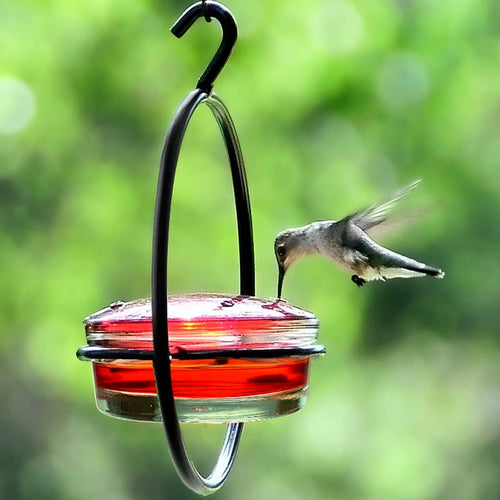
- Bees and wasps: saucer-style feeders keep nectar farther from the ports than bottle-style feeders, so insects can't reach it as easily. Avoid yellow feeder parts, which attract bees.
- Leaks: a dripping feeder draws insects. Check seals and avoid hanging feeders in direct afternoon sun, which makes nectar expand and drip.
- Never use oil, petroleum jelly or insecticide on or near a feeder.
A season-by-season checklist
| Season | To do |
|---|---|
| Late winter | Order native plants; clean and inspect feeders |
| Spring | Hang feeders before arrival; plant columbine and honeysuckle |
| Summer | Change nectar often; add a second feeder if one male dominates |
| Late summer | Expect the busiest feeders of the year as young birds and migrants arrive |
| Fall | Keep feeders up until two weeks after the last sighting |
Get set up
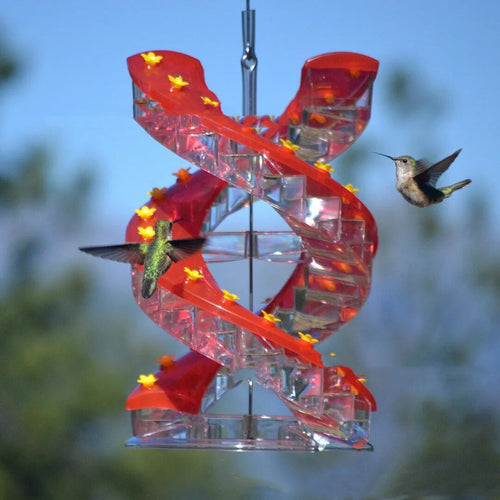
Our hummingbird collection includes glass feeders and garden pieces; more gear is in Backyard Gear.
 Hand-Blown Glass Hummingbird Feeder, 33 oz with Perch RingShop now →
 Mason Jar Hummingbird Feeder, 6 oz GlassShop now →
 Double Shepherd's Hooks, 76 in, Set of 2Shop now →
 Solar Hummingbird Wind Chime LightShop now →
FAQ
Where should you not hang a hummingbird feeder?
Avoid 3–30 feet from a window, hot full sun, and spots where cats can lurk underneath.
Do I need red nectar?
No. Plain 1:4 sugar water is best; the feeder's red parts do the attracting.
How long until hummingbirds find my feeder?
It can take a few days to a few weeks. Flowers nearby and a feeder hung in the open speed things up.
Do banana peels attract hummingbirds?
Overripe fruit attracts fruit flies, which hummingbirds do eat — but it also attracts wasps and makes a mess. Native flowers are a cleaner way to provide insects.
Sources & further reading


More from the Journal
Winter Bird Feeding Tips: What to Feed & How to Help Birds
Long nights and short days make winter tough for small birds. The best foods, smart feeder setup, and hygiene habits that keep your winter flock healthy.
4 min read
Spring Bird Migration: When It Peaks & How to See It
Billions of birds move north every spring, mostly at night. Here's when migration peaks where you live, how to read the forecasts, and how to catch the show.
4 min read
Ruby-throated Hummingbird: Male vs. Female, Migration & Feeding
The only hummingbird that nests across most of the East weighs less than a nickel and crosses the Gulf of Mexico. Here's how to tell males from females — and when to...
4 min read