

Black-capped Chickadee: ID, Song & Carolina Chickadee Differences
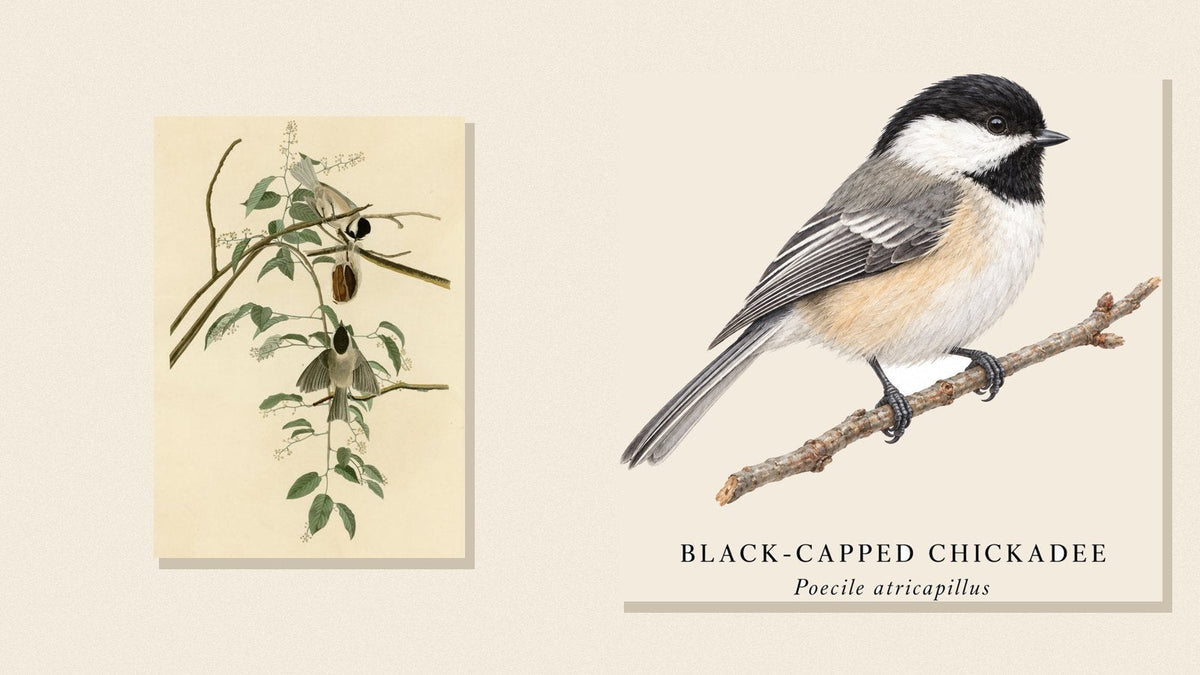
If one bird could convince a skeptic that backyard birding is fun, it might be the Black-capped Chickadee. It is tiny, round, curious, and so unafraid of people that in some parks it will land on an open hand. It also has one of the most fascinating voices in the bird world. Here is how to recognize it — and how not to confuse it with its southern look-alike.
Quick ID
- Size: roughly 5 inches long and about the weight of two quarters.
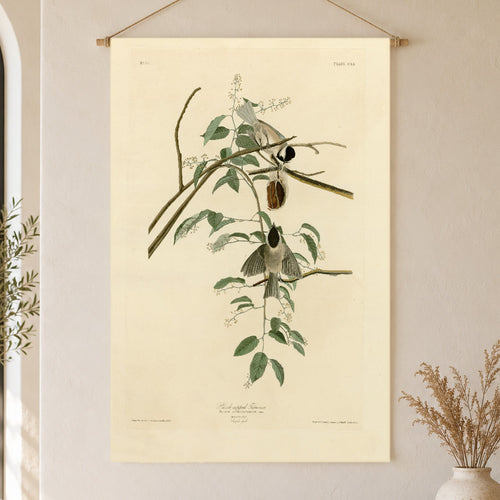
- Pattern: black cap, black bib, bright white cheeks, soft gray back, and buffy-tan sides.
- Wings: gray with noticeable white edges on the feathers.
- Behavior: acrobatic — often hangs upside down on twigs; grabs one seed and flies off to eat or hide it.

The famous call — and what it means
The chickadee literally says its name: chick-a-dee-dee-dee. That call is used to keep the flock together and to warn of danger. Researchers have found that the number of "dee" notes tends to rise when the threat is greater — a small, agile hawk or owl perched nearby can earn a long string of dees, and other birds in the area pay attention.
The song is different: a clear, sweet, two-note whistle, fee-bee, with the second note lower. You'll hear it most from late winter into spring, and it's one of the easiest bird songs to whistle back.
Black-capped vs. Carolina Chickadee
Across a band stretching from Kansas to New Jersey, Black-capped and Carolina Chickadees meet — and even hybridize. North of that zone you're almost always seeing Black-capped; in the Southeast, Carolina. Within the overlap, use several clues together:
| Clue | Black-capped | Carolina |
|---|---|---|
| Range | Northern US, Canada, Alaska | Southeastern US |
| Wing edges | Bold white edges on wing feathers | Plain gray wing |
| Bib | Larger, ragged lower edge | Smaller, neater edge |
| Song | Two notes: fee-bee | Usually four notes: fee-bee fee-bay |
| Call | Slower, lower dee notes | Faster, higher dee notes |
Location is honestly the best first clue. In the overlap zone, even experts sometimes record a bird simply as "chickadee sp."
How a 5-inch bird survives winter
Chickadees stay put through brutal northern winters, and they have some remarkable tricks:
- Food caching: in fall they hide thousands of seeds and insects in bark crevices, under lichen and in curled leaves — and remember where many of them are.
- Controlled cooling: on cold nights they can lower their body temperature several degrees to save energy, then warm up again at dawn.
- Insulation: fluffed feathers and shivering keep them warm; they roost in tree cavities and dense evergreens.
- Mixed flocks: chickadees lead winter flocks of nuthatches, titmice, kinglets and woodpeckers. Find the chickadees and you often find everyone else.

What chickadees eat (and how to feed them)
In the wild, chickadees eat insects, spiders, insect eggs and seeds, with more plant food in winter. At feeders they love black-oil sunflower seed, sunflower hearts, peanut pieces and suet. Because they take one seed at a time, they're happy at nearly any feeder style — tubes, hoppers, window feeders, even your palm if you are very patient.
They also nest in cavities. A nest box with a 1⅛-inch entrance hole, partly filled with wood shavings so they can "excavate," can attract a pair in spring.
Nesting: tiny excavators
Chickadees nest in cavities, but their bills are too small to chip into hard wood. Instead, pairs look for soft, rotting stumps or branches, often birch or alder, and dig out a hole together, carrying the wood chips away so the site isn't obvious. They also use old woodpecker holes and nest boxes. Inside, the female builds a cup of moss lined with soft fur and plant down, and she may cover the eggs with a fluffy "blanket" of material when she leaves.
If something disturbs a sitting female, she may hiss and lunge from inside the dark cavity, a startling sound that seems designed to make a predator think twice.
A year with chickadees
| Season | What they're doing | What you'll notice |
|---|---|---|
| Late winter | Pairs form; males start singing | The sweet fee-bee song on sunny February mornings |
| Spring | Excavating and nesting | Fewer birds at feeders; pairs carrying nest material |
| Summer | Raising and feeding fledglings | Noisy families with short-tailed young |
| Fall | Caching food, forming flocks | Busy trips from feeder to tree, hiding seeds |
| Winter | Leading mixed flocks | Chickadees arrive with nuthatches, titmice and woodpeckers |
A brain that grows in fall
To keep track of all those hidden seeds, chickadees rely on spatial memory. Studies have found that the hippocampus, the part of the brain tied to spatial memory, can add new neurons in fall when caching is at its peak. Some scientists think this helps the birds remember a new map of hiding places each year. It's a striking example of how a bird this small is built for a hard season.
Hand-feeding: a patient person's project
Chickadees are among the most likely wild birds to take seed from a hand. Stand very still near a busy feeder, hold out a palm of sunflower hearts, and repeat at the same time each day. Cold, snowy days work best. Keep sessions short, never grab, and remember that the goal is enjoying the visit, not taming the bird.
For chickadee fans
Our Black-capped Chickadee collection puts this little bird on mugs, pillows and sweatshirts — and the "I'm just here for the birds" design features one too.
 Black-capped Chickadee Field Guide MugShop now →
 Black-capped Chickadee Field Guide Throw Pillow CoverShop now →
 I'm Just Here for the Birds MugShop now →
 Clear Window Bird Feeder with Suction Cups, 2 CupShop now →
FAQ
Are Black-capped Chickadees friendly?
They are bold and curious rather than "friendly," but they tolerate people well. With patience and sunflower seed, many people get chickadees to take food from their hand in winter.
How rare is a Black-capped Chickadee?
Not rare — it's one of the most common and widespread feeder birds across the northern US and Canada, and its population is considered stable.
Do chickadees migrate?
Mostly no. They stay year-round, although in some years extra birds wander south in fall.
Which states have the chickadee as state bird?
Both Maine and Massachusetts chose the Black-capped Chickadee.
Sources & further reading
More from the Journal
Winter Bird Feeding Tips: What to Feed & How to Help Birds
Long nights and short days make winter tough for small birds. The best foods, smart feeder setup, and hygiene habits that keep your winter flock healthy.
4 min read
Spring Bird Migration: When It Peaks & How to See It
Billions of birds move north every spring, mostly at night. Here's when migration peaks where you live, how to read the forecasts, and how to catch the show.
4 min read
Ruby-throated Hummingbird: Male vs. Female, Migration & Feeding
The only hummingbird that nests across most of the East weighs less than a nickel and crosses the Gulf of Mexico. Here's how to tell males from females — and when to...
4 min read