

Northern Cardinal Identification: Males, Females & Look-Alikes
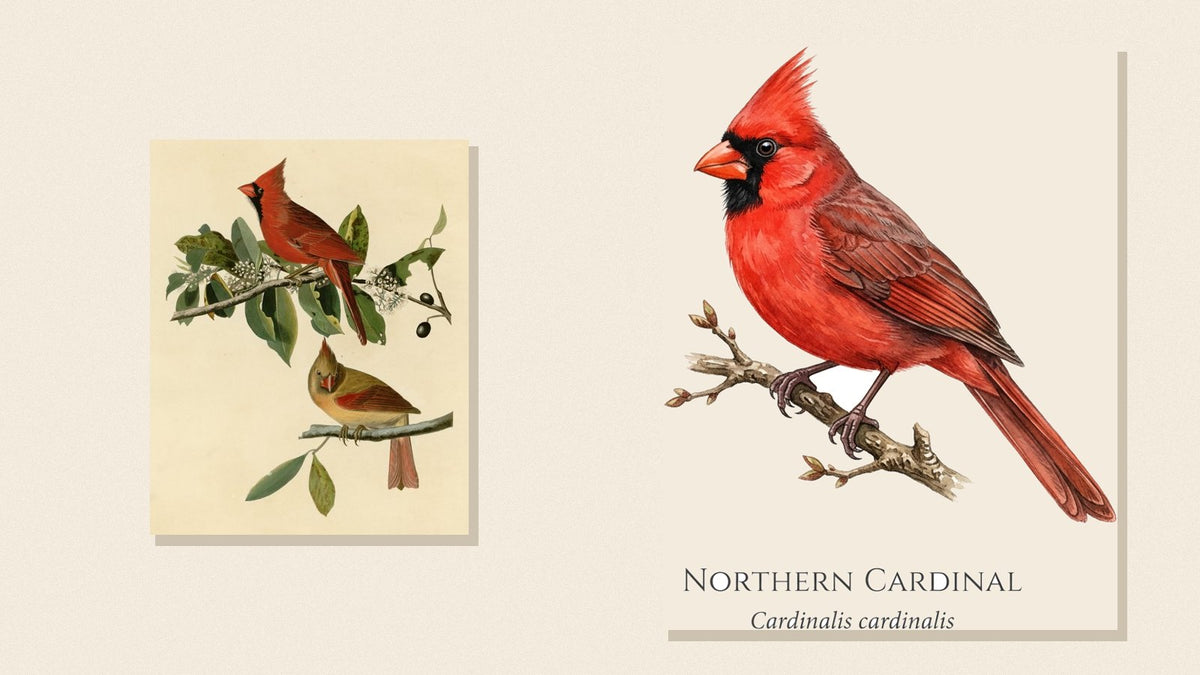
Few birds are as easy to love as the Northern Cardinal. A flash of red on a snowy branch is often the moment people start paying attention to birds at all. Yet cardinals still cause plenty of "wait, what is that?" moments — mostly thanks to the females, the scruffy youngsters, and a handful of other red birds that show up in spring and summer. This guide walks you through everything you need to identify a cardinal with confidence.
Quick ID: the 5-second version
- Size: about 8–9 inches long — a bit smaller than a robin, noticeably bigger than a sparrow.
- Shape: a pointed crest, a long tail, and a short, very thick, cone-shaped bill built for cracking seeds.
- Male: red all over, with a black "mask" around the bill.
- Female: warm tan to olive-brown, with red tinges on the crest, wings and tail, and the same orange-red bill.
- Sound: loud, clear whistles — cheer, cheer, cheer or birdie-birdie-birdie — and a sharp, metallic chip.

Male vs. female cardinals
Cardinals are one of the best birds for learning how males and females of the same species can look completely different.
The male
Adult males are the classic Christmas-card bird: bright red from crest to tail, with a black face that surrounds the base of the bill. In fresh fall feathers the red can look slightly frosted with gray; by spring the gray tips have worn off and the bird glows.
The female
Females are the bird people most often fail to recognize. Look for a soft tan or buffy-brown body, a grayish face mask, and red edging on the wings, tail and crest. The giveaway is the bill: the same thick, orange-red cone as the male. Female cardinals also sing — often from the nest — which surprises many backyard watchers.
Juveniles
Young cardinals in summer look like a duller version of the female, but with a dark gray or blackish bill and often a messy, half-grown crest. As they molt in their first fall, young males gradually turn red and the bill brightens to orange, so by winter most are hard to tell from adults.
| Field mark | Adult male | Adult female | Juvenile |
|---|---|---|---|
| Body color | Bright red | Tan / olive-brown | Brownish, duller than female |
| Face | Black mask | Gray mask | Faint or none |
| Bill | Orange-red | Orange-red | Dark gray to black |
| Red accents | Everywhere | Crest, wings, tail | Wings and tail, faint |
Birds that get mistaken for cardinals
One of the most-searched questions about cardinals is "what bird gets mistaken for a cardinal?" Here are the usual suspects:
- Summer Tanager — the male is red all over, but has no crest, no black face, and a long pale bill. It prefers insects (especially bees and wasps) and rarely visits seed feeders.
- Scarlet Tanager — a brilliant red body with jet-black wings and tail. A forest bird of spring and summer.
- House Finch — males show red on the head and chest, but they are smaller, streaky brown on the belly and lack a crest.
- Pyrrhuloxia — the "desert cardinal" of the Southwest: mostly gray with red accents and a stubby yellow bill.
Songs and calls
Cardinals sing nearly year-round, and they are among the first birds singing on late-winter mornings. Songs are loud strings of slurred whistles — cheer-cheer-cheer, purty-purty-purty or birdie-birdie-birdie — and a single bird may know many variations. The call you'll hear most at the feeder is a short, bright chip, a little like two pebbles knocked together.

Where and when to see them
Northern Cardinals are year-round residents across the eastern and central United States, south into Mexico, and in parts of the desert Southwest. They do not migrate, which is exactly why they stand out so vividly in winter. Over the past century their range has pushed steadily north into New England and southern Canada, helped by backyard feeders and shrubby suburban landscapes. They are the state bird of seven states — more than any other species.
How to attract cardinals
- Food: black-oil sunflower and safflower seed are favorites. Cardinals are big, so they prefer a sturdy platform, a hopper, or a tray rather than a tiny tube perch.
- Cover: dense shrubs, tangles and evergreens give them places to hide and nest, usually just a few feet off the ground.
- Timing: cardinals are often the first birds at the feeder at dawn and the last at dusk.
And if a cardinal keeps "attacking" your window or car mirror in spring? It's defending its territory from its own reflection. Covering the outside of the glass for a few weeks usually solves it.
Bring a cardinal home
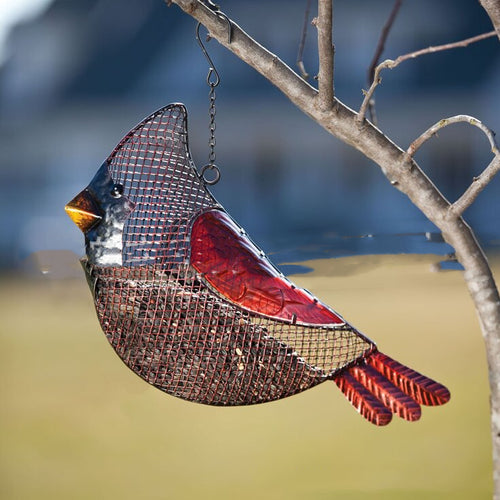
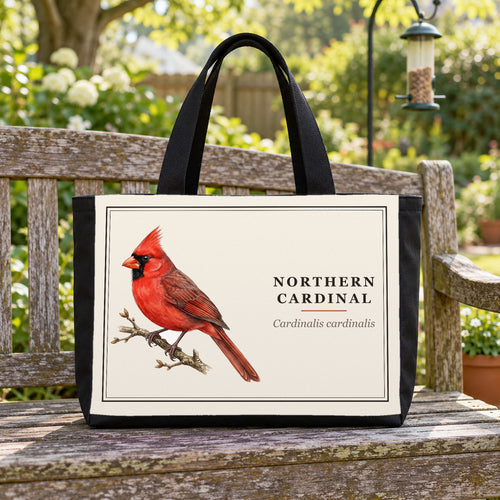
If cardinals are your spark bird, our Northern Cardinal collection features the same field-guide illustration on mugs, flags and cozy blankets.
 Northern Cardinal Field Guide MugShop now →
 Northern Cardinal Field Guide FlagShop now →
 Northern Cardinal Vintage Field Plate Wall Art PrintShop now →
 Northern Cardinal Field Guide Sherpa BlanketShop now →
FAQ
How rare is it to see a Northern Cardinal?
Not rare at all within their range — they are among the most common backyard birds in the eastern US. Outside that range (much of the West and Northwest) they are genuinely unusual.
Is there a difference between a "cardinal" and a "Northern Cardinal"?
In everyday speech, no. "Northern Cardinal" is the official name that separates it from other cardinal species in Central and South America, like the Vermilion Cardinal.
At what age do cardinals turn red?
Young males start molting into red feathers a few months after leaving the nest, in their first late summer and fall. By winter most look like adults.
Do cardinals mate for life?
Pairs often stay together through the year and across several breeding seasons, though "divorces" do happen. Watch for the male feeding the female seed, beak to beak, in late winter.
Sources & further reading


More from the Journal
Winter Bird Feeding Tips: What to Feed & How to Help Birds
Long nights and short days make winter tough for small birds. The best foods, smart feeder setup, and hygiene habits that keep your winter flock healthy.
4 min read
Spring Bird Migration: When It Peaks & How to See It
Billions of birds move north every spring, mostly at night. Here's when migration peaks where you live, how to read the forecasts, and how to catch the show.
4 min read
Ruby-throated Hummingbird: Male vs. Female, Migration & Feeding
The only hummingbird that nests across most of the East weighs less than a nickel and crosses the Gulf of Mexico. Here's how to tell males from females — and when to...
4 min read